
Beyond Geopolitics: Why Ethics Matter in Global Peace
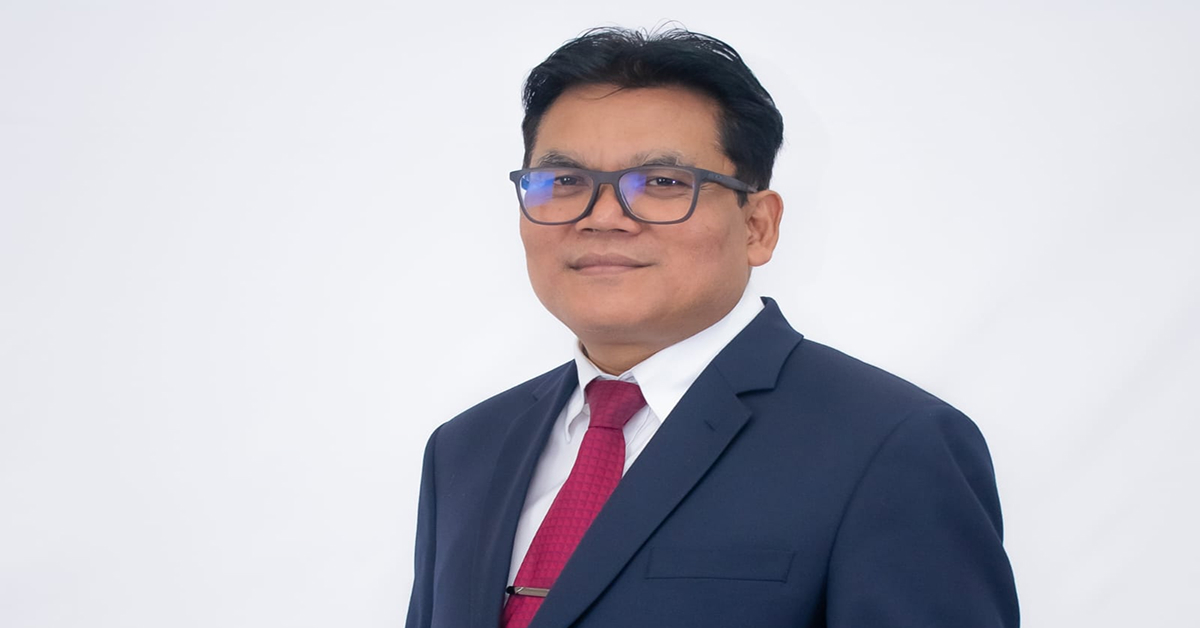
Prof. Asep Saepudin Jahar, M.A., Ph.D.
At a time when the world remains trapped in armed conflicts, geopolitical polarization, and endless power rivalries, a fundamental question emerges: is there still a global actor willing to place humanity above strategic calculation? Indonesia’s answer is clear—yes, and we choose to stand on the side of humanity.
That moral direction was reaffirmed during the recent official visit of the Secretary-General of the Muslim World League (Rabithah al-‘Alam al-Islami) to UIN Syarif Hidayatullah Jakarta. His message was both simple and profound: noble character and honesty are the most powerful assets Muslims possess in contributing to global peace. Far from being merely religious advice, this was a strategic insight for a world increasingly stripped of its moral language.
Moral Diplomacy and Islamic Education
Global conflict resolution has long relied on instruments of power—UN resolutions, military deterrence, sanctions, and strategic alliances. History, however, shows that political mechanisms alone rarely produce lasting peace. What is often missing is a moral foundation capable of sustaining reconciliation.
Peacebuilding scholar John Paul Lederach, in The Moral Imagination (2005), argues that genuine peace depends on “relational courage”—the willingness to nurture relationships rather than dominate them. This principle closely aligns with Islamic educational traditions, where knowledge and ethical conduct are inseparable.
Research by Katherine Marshall (Georgetown University, 2022) further demonstrates that religious and educational institutions are most effective as mediators when they emphasize transparency, trust, empathy, and accountability—not theological dogma. The strength of Islamic education, therefore, lies not merely in curriculum content but in the character it cultivates.
Islamic schools, pesantren, and universities are uniquely positioned to produce more than graduates. They can nurture custodians of humanity—individuals who place human dignity at the center of politics, economics, and international relations.
Indonesia as a Model of Global Moderation
In a world fractured by religious and ideological polarization, Indonesia is frequently described by international scholars as a “positive anomaly.” It is home to the world’s largest Muslim population and one of the largest pluralist democracies—and the two coexist without contradiction.
Political analyst Stanley R. Sloan (2020) notes that Indonesia’s uniqueness lies in its ability to balance religion, democracy, and humanity. Rather than drifting toward secular extremism or religious radicalism, Indonesia has embraced moderation rooted in civic virtue—where faith informs social ethics rather than political domination.
This is why Indonesia’s voice on global conflicts carries moral credibility, not merely diplomatic weight. The Muslim World League’s visit to UIN Jakarta reflects international recognition of this model.
Indonesia does not exert influence through military force or economic coercion. Its strength lies in social example—demonstrating that interfaith dialogue, pluralism, and respect for human dignity can function in real life, not just in theory. At a time when many nations seek control, Indonesia offers leadership that nurtures rather than subjugates.
Education as the Infrastructure of Peace
If moral integrity and honesty are the foundation of global peace, education is the system that makes them real. The world is not lacking moral rhetoric; it is lacking educational ecosystems that genuinely form ethical character.
The UNESCO Future of Education Report (2021) emphasizes that humanity’s future depends on cultivating ethical resilience—the capacity to resist falsehood, intolerance, digital manipulation, and normalized violence.
Islamic educational institutions possess epistemic resources that secular systems often lack: ethical scholarship (ulūmul akhlāq), disciplined learning traditions, sincere teacher–student relationships, and an orientation toward knowledge as service to humanity (li khidmati al-nās).
When these values are sustained, education becomes a workshop for civilization. Integrated curricula linking science, ethics, faith, and humanity can transform classrooms into peace-building laboratories. Booker and Dalton (Harvard, 2023) describe such value-based institutions as “peace infrastructure,” preparing future leaders with moral capacity before technical expertise.
In Indonesia, this transformation is already underway. Pesantren, madrasah, and Islamic universities are evolving into centers of scholarship, social innovation, and moral diplomacy. Peacebuilding, therefore, is no longer the sole responsibility of foreign ministries—it becomes a national mission. Every educator becomes a guardian of civilization; every campus, a center of moral diplomacy; every graduate, a bearer of ethical responsibility.
Conclusion: Civilization Begins with the Heart
History teaches us that power does not guarantee remembrance. Nations endure not because they dominate, but because they contribute goodness to humanity.
Weapons may stop wars, but only ethics can end hatred. Indonesia’s cultural inheritance—tolerance, pluralism, and deeply rooted Islamic intellectual traditions—provides a rare foundation for ethical leadership.
Political philosopher Bhikhu Parekh (2008) argues that a civilization becomes a moral reference point only when honesty, empathy, and respect for human dignity shape everyday social interaction. Ethics, in this sense, is not an accessory to development—it is its foundation.
When honesty guides public life, when education honors integrity, when leadership sets moral examples, and when society nurtures trust, a nation becomes strong without coercion and respected without intimidation.
Civilization begins with the heart—with the courage to choose integrity over manipulation, dignity over spectacle, and cooperation over polarization. If Indonesia sustains this ethical commitment collectively, it will not merely become a “great nation” but a global moral beacon—one that heals the world rather than conquers it.
May this effort be guided so that religion returns to its true purpose: a source of mercy, not division; and that Indonesia shines not only by its size, but by the depth of its contribution to global peace.
This article was published in the opinion column of Disway.id on Friday, December 5, 2025.