
A World at War, A Call for Conscience
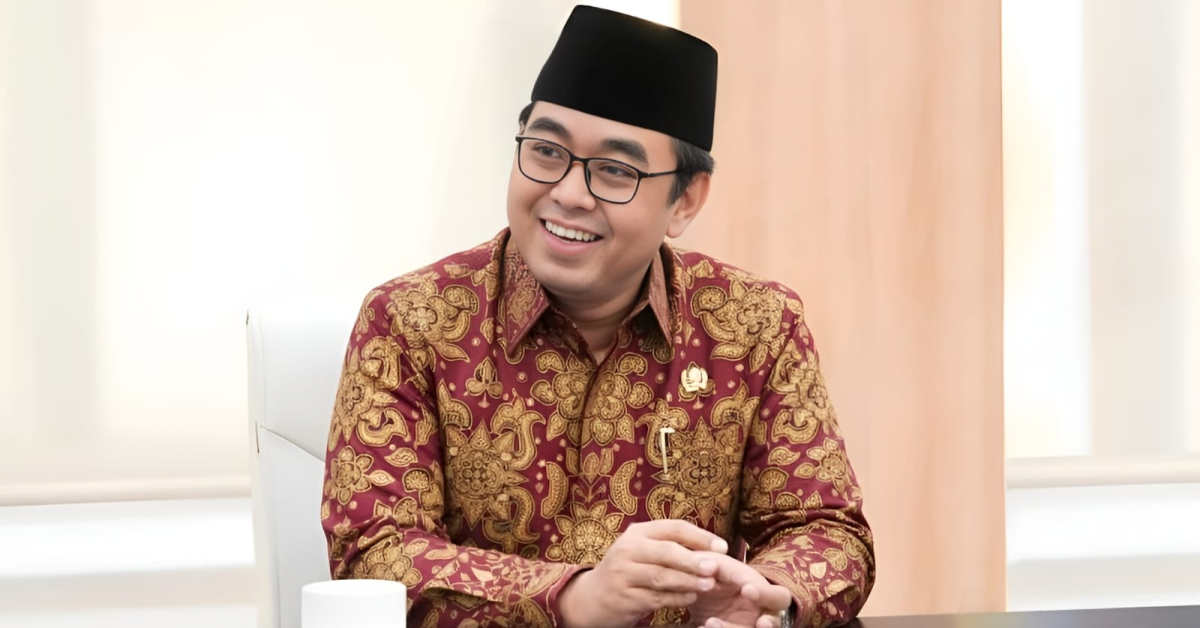
Ahmad Tholabi Kharlie
(Professor at UIN Syarif Hidayatullah Jakarta)
Amid the ongoing conflict in the Middle East that continues to claim civilian lives and worsen the humanitarian crisis, the Vatican’s call for peace during the Easter moment delivers a moral message that should not be seen as merely ceremonial (Saturday, April 4, 2026).
The statement that peace cannot be imposed through violence but must instead be built through dialogue is essentially a sharp critique of a world civilization increasingly reliant on hard power rather than moral power.
In this context, religion is once again called upon to play its most fundamental ethical role: to serve as a clarifier of the public conscience.
Pope Leo XIV conveyed a spiritual message emphasizing the social dimension of faith—that war damages the global order and wounds human dignity. This view aligns with a long-standing tradition in global religious thought. Hans Küng, in his monumental work Global Responsibility: In Search of a New World Ethic (1991), asserted that there will be no world peace without peace among religions.
This statement reflects a thesis rooted in historical reality: when religious communities fail to manage differences, conflict often arises; but when they articulate their universal values, religion becomes a powerful force for reconciliation.
Religious Ethics
In Indonesia, this call for peace feels particularly relevant. The involvement of interfaith organizations in safeguarding Easter celebrations demonstrates that tolerance is a living social practice and affirms the strength of national solidarity.
However, we must not ignore a more subtle phenomenon: the rise of religious formalism that is not always accompanied by a deepening of social ethics. Religion is increasingly visible in public spaces—through symbols, slogans, and identities—but often loses its transformative power in shaping social civility.
This raises a critical question: does religion still function as a source of values that drive empathy, or has it been reduced to a tool for identity legitimation?
Charles Taylor, in A Secular Age (2007), reminds us that modernity has changed how religion appears in public life. Religion is now one source of meaning among many. In this situation, the main challenge is relevance—the ability to communicate its message in a universal human language that reaches across communities.
In Islamic thought, the principle of rahmatan li al-‘alamin affirms that religion must bring compassion to all creation, not only to its own followers. Nurcholish Madjid repeatedly emphasized that true religiosity is reflected in inclusiveness and respect for universal humanity.
In Hinduism, the teaching of Tat Tvam Asi (“I am you”) highlights the existential unity of humanity as a foundation for ethical empathy. Meanwhile, in Buddhism, the concept of Karuna (compassion) places the alleviation of suffering as the central goal of moral life.
Together, these values show that across religions, there is a strong shared ethical foundation for building peace.
National Ethics
The Vatican’s call to pay attention to marginalized groups also opens broader reflection. Despite economic growth and infrastructure development, Indonesia still faces significant social inequality. Data from Statistics Indonesia (BPS) in 2024 shows a poverty rate of around 9 percent, with notable disparities between urban and rural areas.
Meanwhile, various reports indicate that vulnerable groups, including informal workers and communities in underdeveloped regions, still face limited access to basic services. In this context, religious messages about solidarity must be translated into public policy that takes sides with the disadvantaged.
It must be acknowledged that, in social practice, religion often interacts with political dynamics and identity. In many cases, including in Indonesia, religious sentiment can be mobilized for power interests. Therefore, it is crucial to ensure that religion’s noble values remain directed toward humanity and peace.
Thus, the call for peace must also be accompanied by internal reflection within religious communities on their ability to uphold and live out ethical values.
Data from surveys conducted by institutions such as PPIM UIN Jakarta and the Setara Institute in recent years show that Indonesia’s level of tolerance is “moderate,” but still marked by resistance toward groups with different beliefs.
This indicates that our tolerance remains procedural and has not fully transformed into substantive awareness. In this context, real practices—such as interfaith security efforts during religious celebrations—are essential as forms of “living tolerance” that go beyond discourse.
Furthermore, the metaphor of Easter as a movement “from darkness into light” can be read as a reflection of our national condition. Darkness may take the form of declining trust in public institutions, widespread corruption, and hardened social polarization, especially during electoral politics.
Light, on the other hand, represents hope for more just governance, a more inclusive society, and a more civilized public sphere. The question is: do we have the collective courage to make that exodus from darkness?
In this framework, religion holds strategic potential as a source of public ethics. However, this potential will only be realized if religion transcends itself—moving beyond narrow exclusivism toward universal values. Peace, as emphasized in the Vatican’s call, is born from the willingness to embrace. This simple principle is essential in both political and social practice.
Indonesia, with all its complexity, actually has sufficient social capital to become an example of how religion can contribute to peace. Traditions of mutual cooperation, local wisdom, and a historical experience of living in diversity are assets not many nations possess. Yet these assets are meaningless without critical awareness to sustain them.
At this point, the Vatican’s call for peace finds its relevance as part of cross-religious values that affirm humanity. A world that loses empathy easily falls into violence, while a society that nurtures dialogue has a greater chance to endure and thrive.
Ultimately, what matters most is our willingness to live out the message of peace in daily life. Peace becomes a prerequisite for the survival of a nation—growing from the courage to embrace differences, defend the vulnerable, and reject all forms of violence.
This article was published in the Opinion column of Harian Disway, page 14, on Thursday, April 2026.
The call has resonated and has become a shared responsibility to make it a guiding direction for a more civilized public life.
This article was also published in Kompas on Wednesday, April 8, 2026.