
Preventing Water System Pollution through Wastewater and Hazardous Waste Management at Syarif Hidayatullah State Islamic University Jakarta
Syarif Hidayatullah State Islamic University Jakarta is committed to protecting water systems from pollution through wastewater-management policies, treatment infrastructure, hazardous-waste controls, drainage maintenance, and preventive environmental practices.
The University recognises that polluted water can enter water systems through untreated domestic wastewater, laboratory activities, chemical residues, accidental releases, surface runoff, and inappropriate waste disposal. To address these risks, Syarif Hidayatullah State Islamic University Jakarta has established institutional policies and operational measures designed to prevent contaminants from entering groundwater, drainage systems, and surrounding aquatic environments.
These initiatives contribute to Sustainable Development Goal 6: Clean Water and Sanitation, particularly Indicator 6.3.2 concerning processes for preventing polluted water from entering water systems.
1. Establishing a Formal Wastewater Management Policy
In 2024, Syarif Hidayatullah State Islamic University Jakarta established Rector's Circular Letter Number 18 of 2024 concerning Wastewater Management. The Circular Letter provides an institutional framework for the management of wastewater generated through University activities.
It supports the treatment of wastewater before discharge and promotes measures intended to minimise pollution risks to the surrounding environment. The policy forms part of the University's wider Green Campus governance framework and complements other environmental regulations covering water, waste, energy, and infrastructure.
By establishing a specific institutional policy for wastewater, Syarif Hidayatullah State Islamic University Jakarta recognises that pollution prevention requires documented procedures rather than relying solely on individual behaviour.
2. Treating Wastewater before Release or Reuse
Syarif Hidayatullah State Islamic University Jakarta operates wastewater-treatment infrastructure to process liquid waste generated through everyday campus activities.
The University's official water-conservation documentation confirms that wastewater is treated before being reused for non-potable purposes such as landscape irrigation.
This process reduces the likelihood that untreated wastewater will enter drainage systems, soil, groundwater, or other environmental water pathways. Wastewater treatment therefore functions as a direct pollution-prevention mechanism. The University's treatment system also supports more efficient water use by allowing appropriately treated water to be reused rather than discharged immediately.
3. Managing Laboratory Wastewater and Chemical Risks
Laboratory activities represent an important potential source of water pollution because practical and research activities can generate chemical residues, contaminated wash water, and hazardous liquid waste.
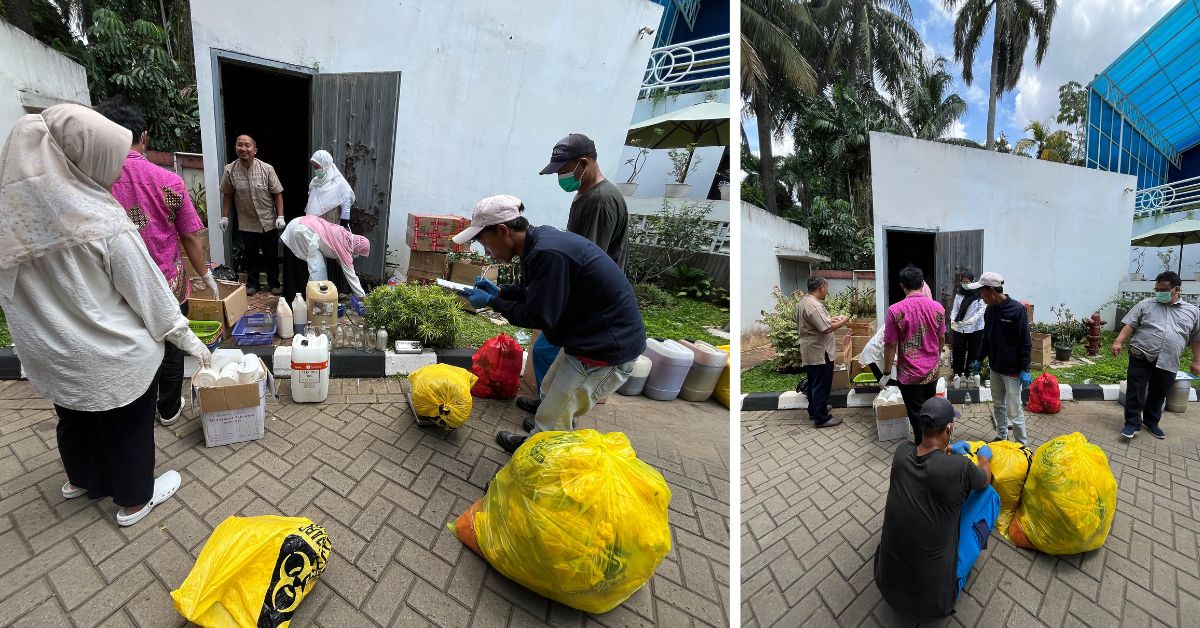
During 2025, the Faculty of Science and Technology documented procedures for handling hazardous waste produced through laboratory activities.
The waste included chemical residues, water used for washing laboratory equipment, test samples, and other materials generated by research and practical activities. Laboratory personnel recorded hazardous waste according to type and volume, stored it appropriately, and transferred it through an authorised waste-management process.
These practices reduce the risk of hazardous laboratory materials being disposed of through sinks, drains, or other pathways leading into the campus water system.

4. Preventing Pollution from Hazardous and Toxic Waste
The Faculty of Health Sciences also implements procedures for the controlled disposal of hazardous and toxic waste.
Laboratory waste is stored in labelled temporary storage areas before being transported and processed by certified external waste-management providers. The waste includes infectious and toxic materials originating from practical activities, research, used containers, and expired chemicals.
This controlled approach prevents hazardous substances from being released directly into the environment.
Such procedures are particularly important for preventing accidental or inappropriate discharge into wastewater systems.
5. Maintaining Drainage and Water Infrastructure
Pollution prevention also depends on the condition of campus water infrastructure.
The University's 2024 Green Campus programme included maintenance of drainage channels and water-related infrastructure. The programme also supported infiltration wells, biopores, rainwater harvesting, and improved management of surface water.
Maintaining drainage systems helps reduce the accumulation of waste and pollutants that could otherwise be transported through runoff. Infiltration and rainwater-management infrastructure also contribute to better control of stormwater movement across the campus.
6. Supporting Water Management through Institutional Policy
Wastewater pollution prevention is complemented by Rector's Circular Letter Number 22 of 2024 concerning Water Management.
The University's water-management framework addresses conservation, drainage, water reuse, rainwater harvesting, and protection of water resources. Together, Circular Letters Number 18 and 22 establish complementary institutional mechanisms for both wastewater control and responsible water management.
These measures strengthen the University's capacity to prevent pollutants from entering water systems while improving overall water-resource efficiency.
7. Strengthening Environmental Governance
In 2025, Syarif Hidayatullah State Islamic University Jakarta established the Green Campus Development Centre to strengthen implementation of its sustainability policies. The Centre includes a division responsible for water, energy, and waste management.
This institutional structure strengthens coordination of environmental programmes and provides a mechanism for improving monitoring and implementation across University units.
By integrating water pollution prevention into broader environmental governance, Syarif Hidayatullah State Islamic University Jakarta supports more consistent implementation of wastewater, waste, and water-management measures.
8. Reducing Pollution Risks from Routine and Accidental Sources
Preventing water-system pollution requires attention to both routine wastewater and unexpected contamination risks.
Routine pollution risks are addressed through wastewater treatment and controlled waste management. Laboratory and hazardous-waste procedures reduce the possibility that chemicals, contaminated water, or hazardous substances will enter drains or soil. Infrastructure maintenance reduces the likelihood of uncontrolled runoff or drainage problems.
Together, these measures create multiple barriers between potential pollutants and the University's water system. Further documentation of emergency spill-response procedures, incident reporting, and corrective actions would strengthen evidence concerning accidental pollution prevention.
9. Contribution to SDG 6: Clean Water and Sanitation
Syarif Hidayatullah State Islamic University Jakarta demonstrates a documented commitment to preventing water pollution through institutional policy, treatment infrastructure, hazardous-waste management, and drainage maintenance. Rector's Circular Letter Number 18 of 2024 establishes the University's wastewater-management framework.
Wastewater treatment infrastructure processes liquid waste before reuse or release. Laboratory units implement controlled procedures for hazardous chemical and biological waste. The University's Green Campus programme also supports drainage maintenance, infiltration systems, and responsible water management.
Together, these measures demonstrate that Syarif Hidayatullah State Islamic University Jakarta has established processes designed to prevent polluted water and hazardous substances from entering campus water systems and the surrounding environment. Through these initiatives, the University contributes to Sustainable Development Goal 6, particularly Indicator 6.3.2, by reducing pollution risks and strengthening the protection of water resources.
Source :
https://asset.uinjkt.ac.id/uploads/EeDtDVkt/2025/02/250225-laporan-kinerja-keuangan-2024compressed.pdf
https://biroauk.uinjkt.ac.id/id/dokumen
https://fikes.uinjkt.ac.id/index.php/id/pengelola-laboratorium-fikes-melaksanakan-proses-pembuangan-limbah-bahan-berbahaya-dan-beracun-b3
https://fst.uinjkt.ac.id/id/lab-fst-uin-jakarta-angkut-limbah-b3-praktikum-dukung-green-campus
https://uinjkt.ac.id/id/konservasi-air