
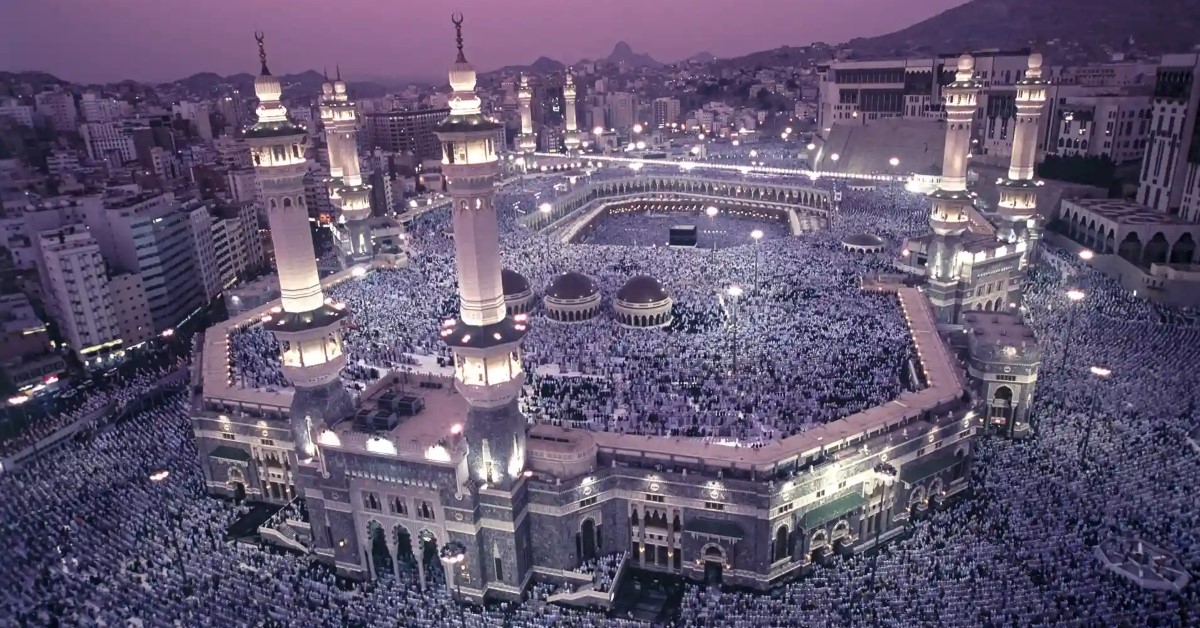
Inside Indonesia’s $1.2 Billion Bet on Makkah
Prof. Dr. Euis Amalia M.Ag.
Professor of Sharia Economics at UIN Jakarta
Ahead of the 1447 Hijriah/2026 CBE pilgrimage season, approximately 221,000 Indonesian pilgrims are preparing to journey to the Holy Land. Behind this massive migration lies a stark, often overlooked reality: the Hajj is not merely a spiritual rite, but a high-stakes macroeconomic engine. The Ministry of Hajj and Umrah projects the financial turnover for the 2026 season alone to hit IDR 18.2 trillion ($1.1 billion USD). When combined with year-round Umrah pilgrimages, the figure breaks past $3.1 billion USD annually. Yet, for decades, a structural anomaly has persisted. Despite being the world’s largest sender of pilgrims, Indonesia has operated purely as a consumer, watching its capital evaporate into the Saudi hospitality, logistics, and catering sectors.
In 2026, the blueprint is changing. As the State of the Global Islamic Economy Report 2024/2025 ranks Indonesia third in the global halal ecosystem—following Malaysia and Saudi Arabia—the nation is launching an aggressive strategy to transform its spiritual footprint into permanent sovereign economic leverage.
Dismantling the Halal Trade Mismatch
The commercial potential of the pilgrimage is immense, spanning from mandatory ritual attire (Ihram) and cosmetics to hotel amenities, pharmaceuticals, and souvenirs. Historically, the multi-million-dollar souvenir market has been dominated by foreign imports re-purchased by pilgrims in Makkah and brought back home. To disrupt this leak, digital platforms are now being deployed to connect pilgrims directly with domestic micro, small, and medium enterprises (MSMEs), shifting consumer spending into a direct stimulus for home-country producers.
The broader geopolitical play, however, lies in direct export integration into the booming market of Makkah and Madinah. Under Saudi Vision 2030, international Umrah arrivals hit 18.03 million in 2025, with a hard target of 30 million by 2030. This surge has triggered an insatiable demand for certified halal food, modest fashion, and healthcare products.
The classic bureaucratic hurdle of certification has finally been solved. The Saudi Halal Center under the Saudi Food and Drug Authority (SFDA) has established a Mutual Recognition Agreement (MRA) with Indonesia’s Halal Product Assurance Organizing Body (BPJPH). With statutory mandates making halal certification strictly mandatory for food and beverage products under Indonesian law, this regulatory alignment gives sovereign exporters a frictionless highway into the Gulf Cooperation Council (GCC) markets.
The "Dam" Economy and the Stunting Intervention
The management of ritual penalties known as Dam serves as a textbook case of broken economic circularity. Pilgrims performing specific forms of Hajj (Tamattu’ and Qiran) are religiously obligated to sacrifice livestock, typically a sheep. With over 221,000 pilgrims, Indonesia’s annual Dam capital hovers around IDR 663 billion ($41 million USD), translating to roughly 2,500 tons of meat. Traditionally, this livestock is slaughtered and distributed within Saudi Arabia, frequently resulting in a local protein surplus that risks wastage, while millions of children back home continue to face nutritional deficits and stunting.
This is where classical Islamic jurisprudence (Fiqh) intersects with aggressive public policy. While traditional edicts strictly dictated that the slaughter must occur within the sacred boundaries of Makkah, contemporary legal frameworks by institutions like BAZNAS (The National Amil Zakat Agency) have opened options for domestic execution and distribution. By positioning the state as an objective platform provider rather than a religious enforcer, the Dam is being restructured into a circular economy mechanism—directly supporting local livestock farmers while executing data-driven nutritional interventions in impoverished regions.
Sovereign Wealth Management and Generational Equity
The financial heart of this ecosystem is managed by the Hajj Financial Management Agency (BPKH). By the end of 2025, BPKH’s total assets under management reached an unprecedented IDR 180.72 trillion ($11.2 billion USD), boasting a compound annual growth rate (CAGR) of 7.03%.
This yield allowed the official cost of the 2026 pilgrimage (BPIH) to be optimized at IDR 87.4 million, with the investment yields subsidizing up to 38% of the real cost per pilgrim.
Yet, this massive subsidy highlights a deep question of intergenerational equity. With a national waiting list exceeding 5.5 million people and an average wait time of 26 years, the current generation is essentially consuming yields generated by the capital of citizens who will not set foot in Makkah for another quarter-century. To shield this capital from inflation, BPKH is aggressively diversifying away from passive instruments and shifting directly into productive investments inside the Hajj ecosystem itself.
The Thakher Shift: From Renters to Landlords
The most historic leap of 2026 is structural: for the first time, a sovereign state has been permitted to develop master-planned real estate within the Holy City of Makkah. Spearheaded by the sovereign wealth fund entity Danantara, the state is breaking ground on the Kampung Haji Indonesia (Indonesian Hajj Village) in the upscale Thakher development area, alongside strategic plots in Western Hindawiyah.
The investment in the Thakher project alone is valued at $1.2 billion USD (approx. IDR 20 trillion). Financed entirely through non-state-budget (Non-APBN) investment schemes, the mega-project will feature over a dozen high-rise residential towers and a commercial mega-mall.
Kampung Haji is a profound shift in geo-economic positioning: moving from tenant to landlord, from pure consumer to asset owner. If managed with an uncompromising commercial vision rather than simple lodging logistics, this enclave will serve as the premier permanent showroom for global halal products, a culinary anchor for international supply chains, and a direct logistics hub in the heart of the Holy City.
The Integrated Halal Frontier
The dream of becoming a global halal superpower cannot be realized through fragmented ministries. The establishment of dedicated directorates for the Hajj Economic Ecosystem is a necessary step, but it requires deep cross-regulatory harmonization.
Three structural policies must define the road ahead. First, the state must mandate strict audited domestic-content requirements for catering and supply chains, ensuring the $1.1 billion season directly fuels national MSMEs. Second, the Kampung Haji project must be designed from day one as a sovereign distribution hub, not just a seasonal hotel. Third, the distribution of social funds and Dam must be mapped explicitly against poverty and health metrics. The 2026 Hajj season is no longer just a logistical challenge of transporting 221,000 citizens; it is the launchpad for a highly sophisticated, integrated sovereign economic frontier.
This article was published in Langit7 on Saturday, May 23th 2026. Photo: SacredSites.