Have an action plan in place to reduce plastic waste on campus
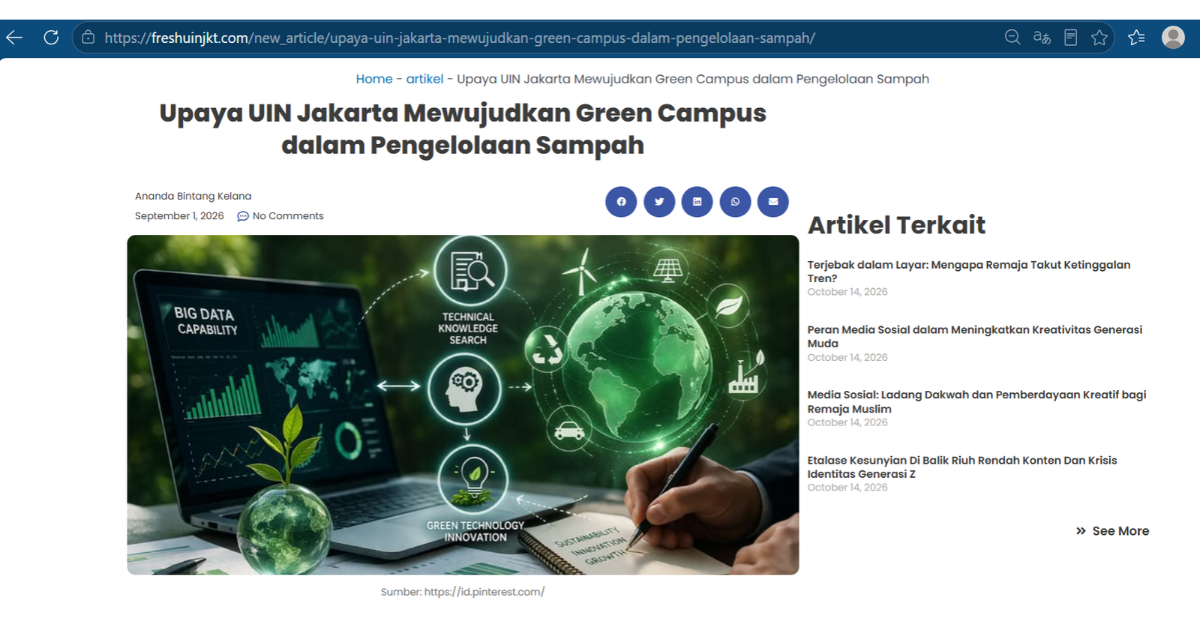
In December 2025, waste piled up in the Ciputat area, including along the road leading to the campus, because the Cipeucang final disposal site was under repair. The university considers waste a serious matter, since the campus should be a healthy and comfortable environment for the whole academic community. Plastic waste that is not managed can end up in drains and rivers and eventually damage aquatic ecosystems. The program aims to reduce plastic waste on campus through segregation, recycling, and education, as part of the Green Campus initiative.
The Green Campus Development Center provides colour-coded bins at key points across the campus: green for organic waste, yellow for inorganic waste such as plastic, metal, and styrofoam, and red for hazardous and toxic waste. A waste processing training session was held in November with an environmental specialist, who showed that plastic waste can be recycled and converted into fuel. The Center also cooperates with PT Garudha Panglimo Nuswantara to study an independent integrated waste management facility based on the Integrated Waste Management concept, covering segregation, collection, processing, and reuse, together with technical guidance on hazardous waste and education for the academic community. At the faculty level, Chemistry students of the Faculty of Science and Technology produced and distributed eco-enzyme made from household organic waste on Campus 1 as practical work for the Environmental Chemistry course, supported by the Rector and the course lecturer.
Source: Upaya UIN Jakarta Mewujudkan Green Campus dalam Pengelolaan Sampah | FRESH UIN Jakarta